Sponsored by PAINKILLER

Find the ouchy pains that drive sales—in under 3 minutes
People buy painkillers. If you don’t understand the painful problems your target buyers will pay to solve, you’re screwed.
I (Katelyn here 👋) built an AI-powered bot to help you better understand buyers by uncovering the deeper, "ouchier" pains they’re struggling with. It's $0.
Imagine this…
Work has been crazy, and tonight is the first time in weeks you’ve had a chance to kick back on the couch and relax.
You’re flipping through channels when you land on one just as it breaks to a holiday commercial.
Even though it’s December, it doesn’t feel like the holidays this year. And this commercial certainly doesn’t change that feeling.
But then the next commercial comes on.
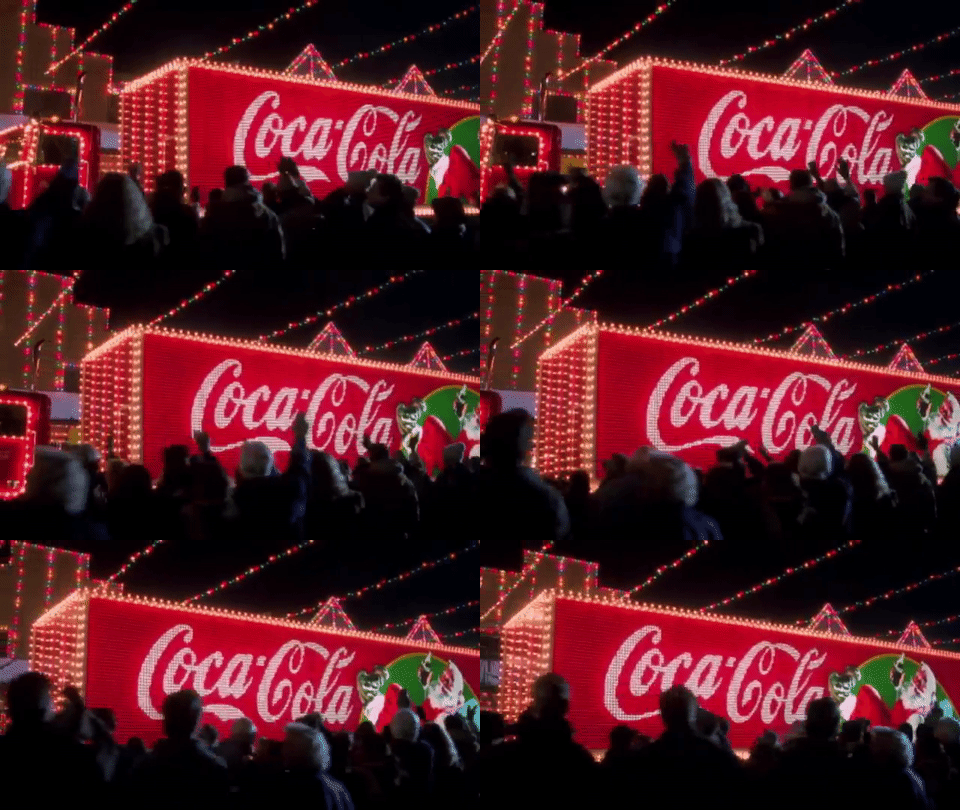
Suddenly, you see a fleet of red trucks lit up like Christmas trees driving down an icy road. And the jingle you’ve heard ever since you were a kid starts playing:
“Holidays are coming! Holidays are coming!”
Your eyes are glued to the screen as you watch the trucks drive into town—and the whole town magically lights up.
Out of nowhere, your chest tightens with a warm, fuzzy feeling.
|
|
Despite thinking you were doomed to be a Grinch this year, this Coca-Cola ad finally makes you feel like the holidays are here.
But it also makes you remember something…
Next thing you know, you’re grabbing your phone.
You click the app you get your groceries delivered from and add a 24-pack of Coca-Cola to your list this week for your holiday party.
Why did this Coca-Cola ad put you in the holiday spirit?
In today’s special edition of Why We Buy 🧠, we’ll explore a well-known company to see how they use buyer psychology principles in their business.
This week we’re diving into Coca-Cola—the brand that turned a brown fizzy drink into a beloved holiday tradition.
Let’s get into it.
🤑 A Look Inside Coca-Cola
In 1931, Coca-Cola hired illustrator Haddon Sundblom to create a Santa for their holiday ads.
Drawing inspiration from Clement Clark Moore’s poem “A Visit From St. Nicholas” (aka “‘Twas The Night Before Christmas”) and using a retired salesman as a model, Sundblom painted a warm, wholesome, grandfatherly figure in Coca-Cola’s brand colors: red and white.
The campaign was a hit.
Sundblom’s Santa appeared in Coke ads for decades, unifying Santa’s iconic image and cementing Coke as a must-have during the holiday season.
|
|
Fast forward to today…
Coca-Cola is a company valued at ~$307 billion and spends over $4 billion annually on marketing.
Every year, their holiday campaigns roll out like clockwork, featuring Santa, polar bears, and red delivery trucks covered with twinkling lights.
The result of using this strategy for decades?
Coca-Cola doesn’t just show up for the holidays. They own them.
🧠 How Coca-Cola Uses Buyer Psychology
Despite there being truckloads of sodas to choose from, Coca-Cola is the one that became a holiday icon. That wasn’t by accident—or luck.
Here are a few ways Coca-Cola turned a brown beverage into one of the most wonderful buys of the year.
Linking
Coca-Cola pairs their soda with holiday imagery: Santa, snow, and twinkling lights. Over time, our brains created a mental shortcut.
We see Coke, we think of the holidays. We see LED lights wrapped around a tree and strung across roofs, we think of Coke.
|
|
That’s why a case of Coke ends up in your cart during December—even if you haven’t touched one since July.
Co-created by Katelyn Bourgoin & Phill Agnew
Stop banging your head against your keyboard trying to write copy that converts.
Wallet-Opening Words will help you sell more using science.
Discover 26.5 science-backed copywriting techniques that will help you make small tweaks that drive BIG sales.
Better yet? Get an AI-powered copywriting assistant to help you go from idea to first draft, FAST. 🤖
Get a complete system to go from idea to first draft... fast
Mere Exposure Effect
The more we’re exposed to something, the more we like it.
And since 1995, Coca-Cola’s “Holidays Are Coming” jingle has played the same role as the first snowfall or putting up the tree: It signals the holiday season has officially started.
|
|
Today, 44% of British viewers say the holiday season doesn’t begin until they see those light-up trucks roll across their TV screens. And 67% report the jingle plays on repeat in their heads.*
Turns out, a few musical notes on loop for 30+ years signal the holidays better than any calendar can.
*Can confirm. We spent 9+ hours writing this issue, and this jingle was stuck in our heads the ENTIRE TIME.
Nostalgia
Over the years, Coca-Cola’s holiday ads have expanded from Santa Claus to iconic polar bears.
The common thread?
These ads don’t tap into any ol’ childhood memory. They target the happiest ones: building snowmen, decorating the tree, enjoying holiday dinners with your family and friends…
|
|
When we see images tied to those cherished memories, our brains release dopamine. We feel good—and we wanna hold onto that feeling as long as possible.
The easiest way to do that? Buy a Coke.
🤔 Thinking About Your Business
Coca-Cola didn’t earn a place at the holiday table with logic. They earned it with emotion. Now you can bottle up some of that same magic that keeps on giving the whole year.
Ask yourself…
Q: What shortcut do you want your brand to trigger in people’s brains?
What do you wanna be synonymous with? Maybe it’s a mission, tagline, or story. Start pairing your brand with supporting imagery, phrases, or experiences that support that until buyers can’t see that thing without thinking of you.
Q: What should you *stop* changing?
Repetition builds trust. So don’t sabotage recognition by constantly switching up your brand (and yes, this includes your fonts, voice, or brand colors). Pick a few signature elements and run them on repeat until they’re seared in your customer’s brain… in a good way.
Q: What emotion do you want buyers to associate with your brand?
Buyers need to feel something before they’ll be compelled to click “buy.” So what’s the emotional residue your brand should leave behind? Is it calm, confidence, or joy? Lean into the specific emotion your customers want most and weave it into every single touchpoint.
💥 The Short of It
Coca-Cola didn’t market themselves as a soda option; they made themselves part of the season through linking, repetition, and nostalgia.
You don’t need a catchy jingle or a Santa suit to do the same.
But if you want buyers to remember and trust you?
Make them feel something first.
Until next time, happy selling!
P.S. Wanna *really* get inside your buyer's head?
There are a few ways we can help:
- Learn 26.5 wallet-opening words that are scientifically proven to boost sales
- Uncover your buyers’ ouchy problems and fix your messaging so more people buy… in just 3.5 days. Get your PAINKILLER 💊 messaging system today
- Apply to sponsor Why We Buy 🧠