
Sponsored by PAINKILLER

Find the ouchy pains that drive sales—in under 3 minutes
People buy painkillers. If you don’t understand the painful problems your target buyers will pay to solve, you’re screwed.
I (Katelyn here 👋) built an AI-powered bot to help you better understand buyers by uncovering the deeper, "ouchier" pains they’re struggling with. It's $0.
Imagine this …
Your good friend invites you to dinner to meet her new boyfriend, Henry.
Unfortunately, your friend doesn’t have the best track-record when picking partners. So when she assures you, “You’re going to love him—trust me,” you have your doubts.
You join them for dinner prepared for the worst. But to your surprise… Henry seems wonderful. He’s charming, funny, and says all the right things.
Better yet? He’s British. You’re always a sucker for a good accent!
The conversation and wine flows liberally and by the time the waiter clears the dinner plates, it’s official—you do like Henry.
The waiter drops off the dessert menu and asks if anyone would like coffee or tea.
Henry orders a tea.
Then your friend orders a tea too.
You’re normally a coffee drinker, but suddenly you find yourself craving tea.
What do you do?
In today’s edition of Why We Buy, we’re taking a look at Mimicry – why we unconsciously imitate behaviours, speech, and movements of others (and how being a copycat can drive conversions).
Let’s get into it.
🧠 The Psychology of Mimicry
If you’ve ever travelled to a foreign country and caught yourself mimicking the local accent adopting local customs, you know how easy it is to unconsciously change your behaviour to fit in.
Social scientists have long been intrigued by the human tendency to mimic the behaviour of others. But new studies show that mimicry isn’t just a subconscious reflex—it’s a sales technique.
In one study, researchers observed that simply watching someone else eat a certain snack food caused the viewer to choose the same snack themselves 71% of the time.
In another experiment, researchers had an actor give out free samples of a new sports drink to people passing by.
When the actor mimicked the speech and posture of people who tried the drink, they rated the product higher, consumed more of it, and were more likely to buy it than people who weren’t mimicked before trying the drink.
Holy Moly, right!?
🧐 Inside Your Buyer’s Mind
It may sound kinda woo-woo but… your vibe attracts your tribe.
Humans are hardwired to gravitate towards people who are more like us.
|
|
Subconsciously we seek to “belong” to a social group, which is why we can quickly adapt in new social environments—like inadvertently mimicking someone’s accent.
Being the social creatures that we are, we’re more likely to respond to a suggestive message positively when it comes from someone who looks like us.
Our drive to fit in is what makes mimicry such a powerful persuasion technique.
🤑 How To Apply This
Alright, so how can we apply this right now to sell more?
Mirror Your Buyer’s Tone and Body Language
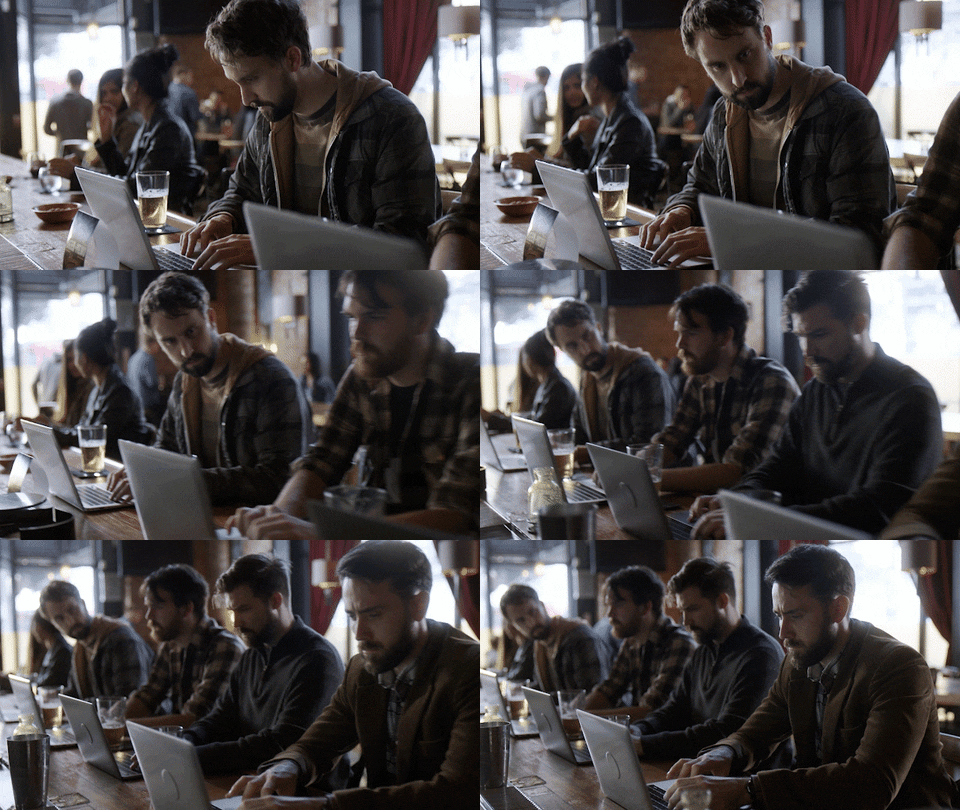
In a sales conversation, loosely mimicking a prospect’s gestures, posture, or speech patterns can help you to build rapport quickly. But don’t overdo it. Mirroring your buyers too blatantly can raise a red flag and put their guard up.
|
|
Co-created by Katelyn Bourgoin & Phill Agnew
Stop banging your head against your keyboard trying to write copy that converts.
Wallet-Opening Words will help you sell more using science.
Discover 26.5 science-backed copywriting techniques that will help you make small tweaks that drive BIG sales.
Better yet? Get an AI-powered copywriting assistant to help you go from idea to first draft, FAST. 🤖
Get a complete system to go from idea to first draft... fast
Sell Using Your Customers’ Words
Use review mining or 1:1 interviews to steal compelling copy straight from the mouths of your best customers and instantly build trust with them.
This one is the (not-so-secret) secret of the world’s top conversion copywriters.
As Joanna Weibbe from Copyhackers says, “I always start with research and discovery. The best messages are not hiding in my head or my client’s heads. The best messages are out there best spoken by our prospects.”
Use Spokespeople Your Buyers Relate To
Choose brand ambassadors that buyers connect with and wish to emulate.
You don’t need a Kardashian to flog your product. But if you know many of your buyers are new moms or university students, using relevant imagery and testimonials can show prospects they belong.
Nespresso made beloved actor George Clooney the face of their brand in 2010. Clooney is approachable, yet stylish and sophisticated—a perfect embodiment of Nespresso’s brand values.
The result? Nespresso sales rose 35.5% in the UK.
|
|
💥 The Short of It
Humans instinctively like people who are more like them.
When you match your tone and style to mimic prospective buyers, they’re more likely to be open to your message.
Mimicry is a persuasive sales technique. It can be highly effective when used honourably. That’s said, you also want to be on the lookout for people who may use it against you.
Until next time, happy selling.
P.S. Wanna *really* get inside your buyer's head?
There are a few ways we can help:
- Learn 26.5 wallet-opening words that are scientifically proven to boost sales
- Uncover your buyers’ ouchy problems and fix your messaging so more people buy… in just 3.5 days. Get your PAINKILLER 💊 messaging system today
- Apply to sponsor Why We Buy 🧠


