
Sponsored by PAINKILLER

Find the ouchy pains that drive sales—in under 3 minutes
People buy painkillers. If you don’t understand the painful problems your target buyers will pay to solve, you’re screwed.
I (Katelyn here 👋) built an AI-powered bot to help you better understand buyers by uncovering the deeper, "ouchier" pains they’re struggling with. It's $0.
Imagine this…
You’re organizing an upcoming office party with your colleagues Jessica and Tom.
Jessica offers to help with food, saying, “I’ll bring dessert for everyone next week! Don’t worry about it—I’ve got this covered.”
You thank her, genuinely relieved that one major item has been checked off your to-do list.
On party day, you’re setting up tables in the conference room when Jessica walks in.
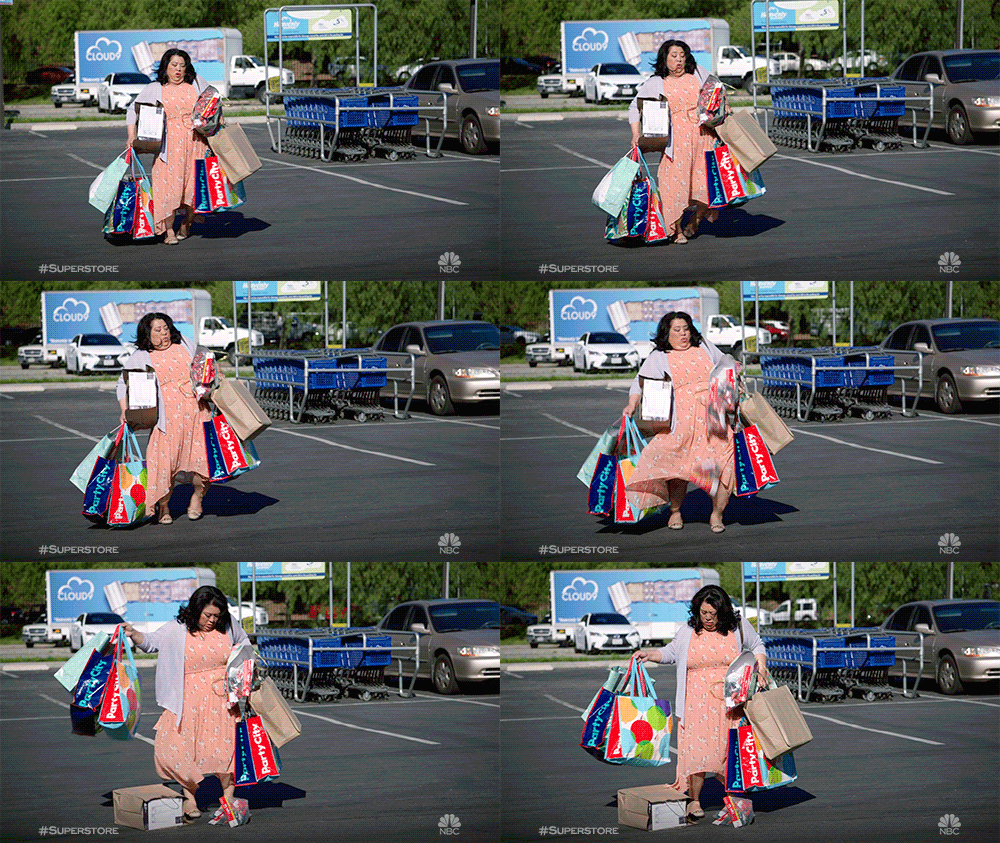
She’s carrying a single tiny sleeve of store-bought sugar cookies. The kind that maybe feeds 5 people if everyone takes one teeny bite.
|
|
By noon, twenty hungry coworkers are eyeing the barren dessert table.
You find yourself making an awkward announcement, apologizing for the shortage while giving Jessica the side-eye.
Then you look over at Tom.
During the planning phase, he never volunteered to help with any of the food. So you assumed he wasn’t participating in that.
And sure enough, he showed up empty-handed.
But here’s the strange part…
You feel like Jessica let you down waaay worse than Tom—and you’re totally judging her for it.
Why are you judging Jessica more than Tom, even though both failures lead to the same outcome?
In today’s edition of Why We Buy 🧠 we’ll explore the Omission Bias—why we judge harmful actions more harshly than harmful inactions.
Let’s get into it.
🧠 The Psychology of the Omission Bias
Researchers gave participants several scenarios.
In one, a tennis player named John knows his opponent Ivan is allergic to cayenne pepper (which is in the restaurant’s house dressing).
When John actively recommended the house dressing to Ivan, 65% of participants said this was worse than when John simply stayed quiet and let Ivan order the dangerous dressing himself.
Both scenarios had the same result: Ivan got sick and John won the match. The intentions were identical, too.
The only difference? John acting vs. staying silent.
Turns out, taking harmful action is considered worse than allowing harm through inaction.
|
|
When it comes to customers, this bias reveals an important clue:
Buying can feel like an action that will carry blame or regret if it backfires, so *not* buying can feel like a safer move.
Smart marketers flip this script by making inaction feel like the decision that’s actually harmful.
🤑 How To Apply This
Alright, so how can you apply this right now to sell more?
SaaS
Show customers the hidden price of doing nothing
HubSpot’s ROI calculator shows businesses the amount of money they’re losing yearly by *not* using their marketing software.
While framing the switch in a positive light (e.g., “leads gained”), the calculator ultimately reveals the missed leads, lower conversion rates, and lost revenue that browsers are currently experiencing.
|
|
When customers see their current approach bleeding money, sticking with the status quo stops feeling neutral and starts feeling like an active choice to lose revenue.
So they’re more likely to start using HubSpot.
Co-created by Katelyn Bourgoin & Phill Agnew
Stop banging your head against your keyboard trying to write copy that converts.
Wallet-Opening Words will help you sell more using science.
Discover 26.5 science-backed copywriting techniques that will help you make small tweaks that drive BIG sales.
Better yet? Get an AI-powered copywriting assistant to help you go from idea to first draft, FAST. 🤖
Get a complete system to go from idea to first draft... fast
E-commerce
Make cart abandonment feel like a loss
Normally, waiting to buy something feels neutral, like you’re doing smart comparison shopping. But with their “Saved Items” banner, Amazon reframes delays as an active choice to pay more. Yikes.
|
|
Even though the prices are virtually the same (just a few cents or a dollar more), by showing concrete dollar amounts that you’re “giving up” through inaction, Amazon makes doing nothing feel financially irresponsible rather than savvy.
Subscriptions
Make inaction feel like a huge missed opportunity
Most of us don’t wanna put another streaming service on our card when we’ve already got Netflix, Hulu, YouTubeTV—okay, you get the point. So *not* subscribing to a new streaming service feels neutral.
Until you see this Starz ad:
|
|
Starz with no ads… for just $12… for the ENTIRE YEAR?
By making the limited-time deal so compelling, Starz implies that inaction is a chosen mistake. Passing on it doesn’t feel safe—it feels like a bad choice you’ll kick yourself for later.
Psst… This deal also uses a little-known psychological technique to drive more sales. Get it + 25.5 other proven copywriting tweaks here >
💥 The Short of It
Customers see buying as riskier than staying put because taking action that potentially backfires feels more blameworthy than doing nothing, even if the outcome is similar.
Smart marketers combat this by showing the hidden costs of inaction, making cart abandonment feel like a loss, or making not buying feel like a chosen mistake.
Because when doing nothing feels like a negative option, saying “yes” transforms into the smarter move.
Until next time, happy selling!
P.S. Wanna *really* get inside your buyer's head?
There are a few ways we can help:
- Learn 26.5 wallet-opening words that are scientifically proven to boost sales
- Uncover your buyers’ ouchy problems and fix your messaging so more people buy… in just 3.5 days. Get your PAINKILLER 💊 messaging system today
- Apply to sponsor Why We Buy 🧠


